

iPhone vs. Android: Which is better for you?
iPhone vs. Android: Which is better for y'all?
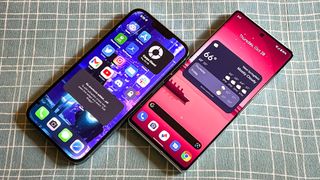
The fight of iPhone vs. Android volition likely never accept a real winner, only nosotros're going to try and assistance you to find your personal pick nevertheless.
The latest version of both operating systems - iOS xv and Android 12 - are both excellent, but in slightly different ways. Many of their features overlap, but pattern-wise they look quite unlike, bated from the basic touchscreen-focused layout. Whichever of the best phones available today you buy, they'll exist running i of these two OSes.
- iPhone 13 review: The pros and cons
- The best Android phones right now
- Craving more screen space? Consider one of the best Android tablets
Pitting iPhone vs. Android, we have a expect at the respective strengths of each mobile platform, so you can choice the correct one for y'all the next time you purchase a smartphone. If you want to see the current flagships for Android and iOS, be sure to check out our Pixel half-dozen vs. iPhone xiii confront-off.
Be sure to check out our iOS 15 review and Android 12 review for more in-depth looks at each new OS version.
iPhone vs Android: Why iPhone is meliorate
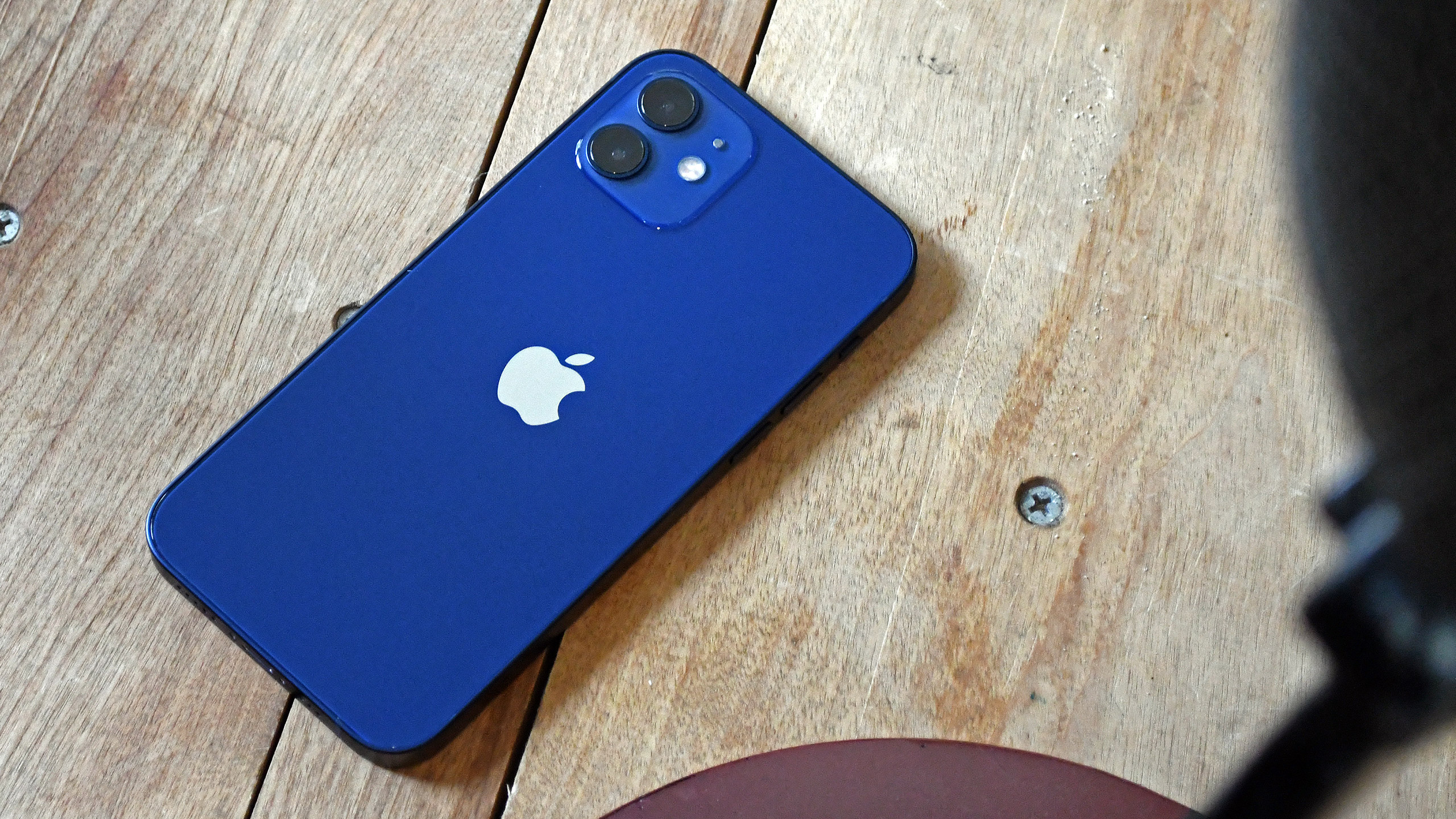
You're invested in Apple's ecosystem. This might seem like a shallow reason, simply Apple tree evidently makes a broad breadth of tech products, and if you lot already own a Mac, iPad or Apple tree Scout, getting an iPhone makes a lot of sense.
Apple has designed a multitude of continuity features that permit yous to carry over work and data from one of its devices to some other, and these features tin certainly save y'all time. Take Handoff, for case, where calls on your iPhone and web pages in Safari tin can move seamlessly between iOS and macOS. Universal Clipboard makes text copied on one platform usable on the other. Another one of our favorites is Continuity Photographic camera, which allows you to take pictures and scan documents using your iPhone's camera, and so view and edit them on your Mac. You can fifty-fifty complete purchases on your Mac by using biometric hallmark features on your iPhone via Apple Pay.
Only a handful of Android phone makers have hardware ecosystems that approach Apple'southward, and even for some that come close, like Samsung, you won't go the depth of integration possible between the iPhone and other Apple-built devices. Microsoft is helping Google close the gap somewhat with its new Your Phone app for Windows, which allows Android users to respond to texts and notifications on their PCs, though the experience is a little clunky and there is still work to be done.
There are many other dandy examples of continuity across iOS, iPadOS, watchOS and macOS — and the iPhone is a critical component in that puzzle, especially at present that iPhone apps can be seamlessly ported to macOS. Power users already immersed in Apple's ecosystem can stand to gain a lot by adding an iPhone to their repertoire. And that's to say nothing of friends and family members who prefer to use iMessage and FaceTime to keep in touch on.
The third-party apps are just better. This one is definitely down to personal preference, but as someone who has jumped back and along betwixt iOS and Android as long as both platforms have existed, I've been consistently blown abroad by the quality of apps built past iOS developers, and mostly disappointed in their Android counterparts.
Don't get me wrong — at that place'south great software and developers on Android, only they're harder to find, in my experience. One of our favorite Twitter apps, Tweetbot 5, is an iOS sectional, for example; by contrast, one of the best third-party Twitter apps we've encountered on Android, Fenix two, strongly pales in comparison. One of our staff members, Henry T. Casey, loves using Acquit to etch blog posts on his Mac and iPhone, but we've struggled to find a note-taking app on Android as comprehensive and slick.
You may even find that apps from established companies, ranging from banks to airlines, are a bit smoother and cleaner on iOS than Android, with better integration with the phone'due south core services, like Wallet.
There'due south a bigger selection of accessories. Walk into any Best Purchase or Target, and you lot'll find aisles of cases for every iPhone that Apple makes — something that certainly cannot be said for the Android contingent outside of flagship devices from the biggest companies. Once yous get past the semi-healthy selection of products made for the latest Galaxy South device, you're out of luck. Don't bother expecting a choice of accessories for your new Pixel or Motorola handset at any brick-and-mortar retailer. Sure, you could get online and snag a $iv example off of Amazon, but and so you're guaranteed to get what you pay for.
The selection and availability of iPhone cases, screen protectors, machine mounts and other goodies is simply far greater than you'll find for whatever other phone, and that'south more important than most people realize. iPhone owners volition never accept the problem of not finding a instance to their liking.
There are enhanced privacy controls with app tracking notifications. One of the biggest contempo iOS releases introduced app tracking notifications, allowing you to opt out of apps tracking you across your phone. This was a major win for privacy advocates and a huge blow to many tertiary-party companies, like Facebook.
Android just doesn't have this feature and nosotros uncertainty information technology ever will. Don't get stuck in the belief that iOS is inherently more private than Android, since Apple still collects a ton of data almost you, just iOS still has a fleck more resilience when it comes to tertiary-parties. It's so satisfying to deny an app the ability to track you lot.

There's no bloatware. No affair how you buy your iPhone, where you purchase it from or what iPhone y'all buy, you won't run into any bloatware preinstalled when yous boot it up for the first fourth dimension. That means information technology's make clean from the very kickoff, with no power- or data-siphoning apps you didn't ask for sabotaging things behind the scenes.
That's a relief if you've always seen the way a new Android phone arrives out of the box — particularly one that you've bought through a carrier. Fifty-fifty spending $1,800 on a Galaxy Z Fold three doesn't spare AT&T customers from the affront of seeing software like CNN and DirecTV Now cluttering their app drawers. And information technology can exist even worse if you buy a budget handset that has been heavily subsidized past a discount carrier.
Android buyers who purchase one of the best unlocked phones without a service agreement will accept ameliorate luck avoiding bloatware. It also depends on the company. For example, unlocked Pixel phones aren't mired down by whatsoever third-political party apps; on the other hand, it'south not totally unheard of for some unlocked handsets to come with the odd unwelcome sponsored software (or ads).
You lot get quicker software updates. Android phones get fewer updates than iPhones, and when they do, they happen less oftentimes and are often delayed with the exception of Google's Pixels.
The number of updates an Android phone sees over the grade of its lifetime depends largely on how expensive information technology is, what carrier you buy information technology from (or if it'south fifty-fifty purchased from a carrier at all) and what the phone maker'southward software support policy is.
That'due south a far cry from iPhones, which are supported with major software updates for many years, no matter what. Take the iPhone 6S, for example, which received iOS 15, even though it originally launched with iOS 9 back in 2015. For comparison, consider Samsung's Galaxy S6, which launched the same year and started with Android 5.0 Lollipop. Not only does it lack the latest Android software, but it stopped getting updates years ago. It only made it as far as 7.0 Nougat when Samsung pulled the plug on support — and when the S6 did get Nougat, it arrived in March 2017, eight months after Google unveiled the update.
What's more than, when a new iOS version is released, it is available to anybody on the same day, at the aforementioned fourth dimension, and can exist installed on all models that support it instantaneously. By contrast, Android releases are rolled out in waves to private phones, non but by model.
It has better retail support. Permit'southward say something goes horribly wrong with your iPhone, and you need to get it serviced. Or peradventure you desire a screen protector installed on it, and you'd rather take it handled by a professional, who will slap that film on with nary a chimera or speck of dust. Whatever your issue is, it's nice to have a place to get — and what better place for iPhone users than the Apple Store. Yes, Covid restrictions tin make this difficult, but at least you have the option.
Owners of Android phones don't necessarily enjoy that luxury. If you lot need a new battery or a screen replacement and you lot didn't purchase a protection plan from the retailer you bought it from, you'll probably have to ship it back to the manufacturer. That's quite a time-consuming hassle, given how much we all depend on our phones solar day in and solar day out. Some reputable repair shops like uBreakiFix help span the gap a bit, similar for Pixel phones.
iPhone vs Android: Why Android is better
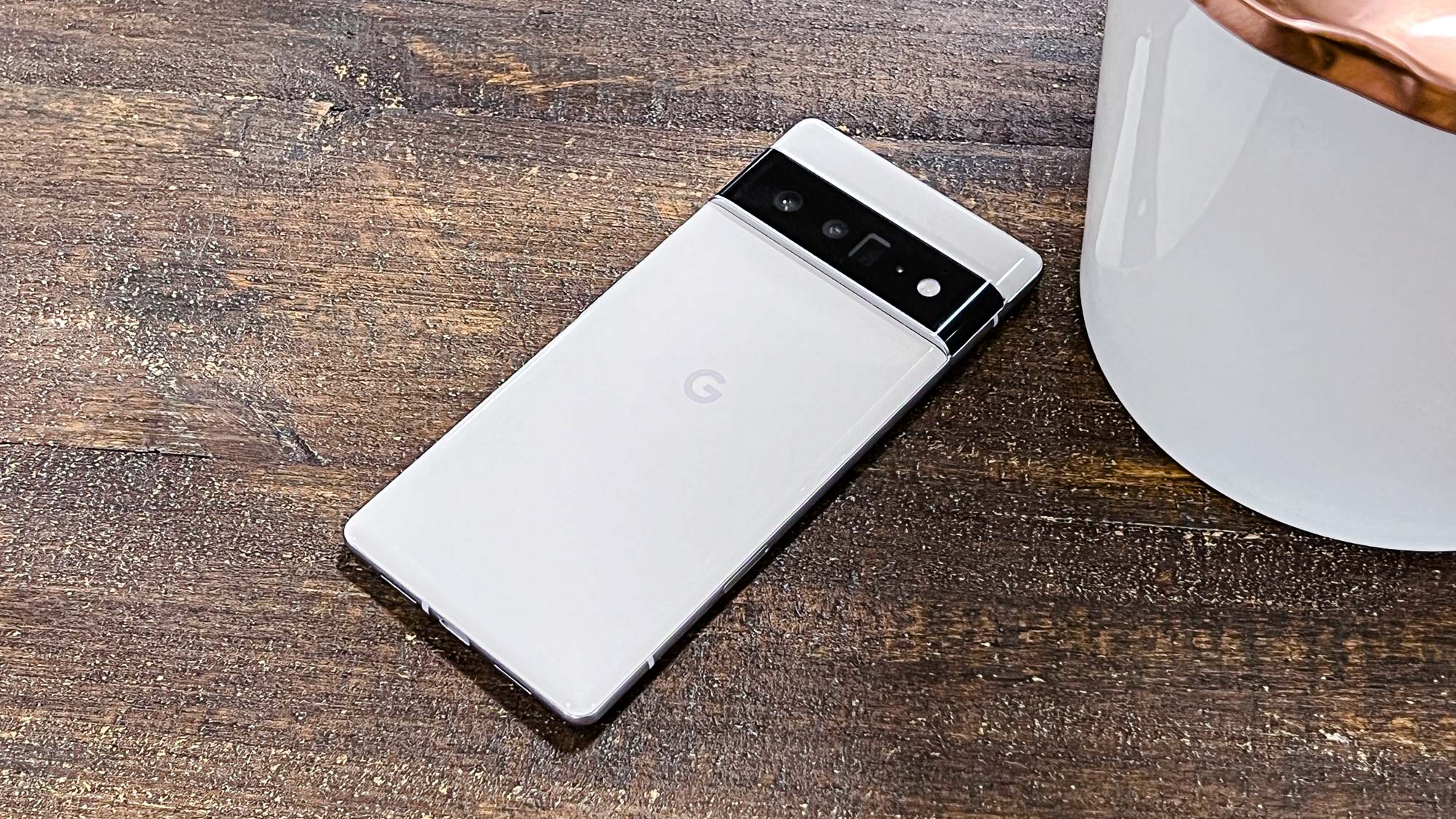
There are phones at every price. The vast majority of the world'south smartphones run Android, and considering so many companies build Android handsets, they're bachelor at every price range. There are cheap phones nether the $500 mark similar the new Pixel 5a, as well as some of the best minor phones and best large phones, and phablets and foldables far exceeding $ane,000. No matter how much you can spend, chances are y'all can find an Android device that fits your budget or offers exclusive features.
The aforementioned cannot be said for iPhones, which historically have been expensive at launch, but to come up down in toll after successive generations. Ane of the near affordable new Apple handsets is the iPhone 13 mini for $699, but that comes with a modest v.4-inch brandish. The Galaxy S21 FE has the aforementioned cost but comes with a bigger and smoother 120Hz 6.4-inch screen, a telephoto lens and a much larger battery. So there's the fantastic $599 Pixel 6, if you can find 1 in stock.
The least-expensive iPhone that Apple tree offers is the iPhone SE, which is a fantastic device with phenomenal performance for just $400, though its design is dated, and its screen volition be too small for some.
Information technology'due south more customizable. Though both iOS and Android accept evolved over the years, Android has always had a reputation for being the platform for users who similar to tinker and personalize their devices. That starts with the home screen launcher, which offers dynamic widgets and the power to identify apps anywhere on a page or in a drawer, out of sight — something the iPhone has only recently caught up to with iOS 14. You lot can fifty-fifty swap out your Android telephone's launcher with an culling downloaded from the Google Play store.
Android as well lets you download third-party replacements for cadre services — like web browsers, keyboards and media players — and ready them as the default versions if you lot prefer a third-party app to one that was preinstalled on your telephone. iOS has improved in this regard over the years, though the implementation is nevertheless somewhat clunky.
Finally, we have to talk about manufacturer skins — bespoke user interfaces and Android system software that are customized by certain phone makers, offering extra features and, often, the ability to create themes for your experience from pinnacle to bottom. Some Android fans adopt Google's "stock" interpretation of Android. Notwithstanding, simply lots of users similar phone makers' custom software, similar Samsung'due south Ane UI or OnePlus' OxygenOS, considering of their extra capabilities, such as the ability to accept scrolling screenshots and hide photos and videos in countersign-protected folders.
Only Google changed things upward with Android 12, which brings with it the new Material You design linguistic communication. This management builds upon the last several years of Android's look and feel, offering more personalization. In that location's a pseudo-theming system which adapts to the colors in your wallpapers and applies that shade system-broad. How the likes of Samsung and OnePlus tweak things in their own skins remains to be seen.
You can (sometimes) expand the storage. Although expandable storage is somewhat less popular these days, some Android phones nevertheless offering it. This allows you to employ a microSD card to keep photos, apps and other media that won't fit on your device's internal retention.
That's an amazing benefit, given the exorbitant prices that Apple and other phone makers charge to double or quadruple storage when you buy your handset. Why tack on some other $100 to $150 to the price of a new phone just for an extra 128GB or 256GB of storage (that you're not even certain you'll need) when yous tin just drop $70 on a 512GB card after?
Additionally, while it'southward certainly becoming more of a rarity on high-cease phones these days, some Android devices withal come with headphone jacks — a hotly requested characteristic Apple tree retired from its phones in 2016. That's a big deal to people who still love to apply their trusty onetime wired headphones.
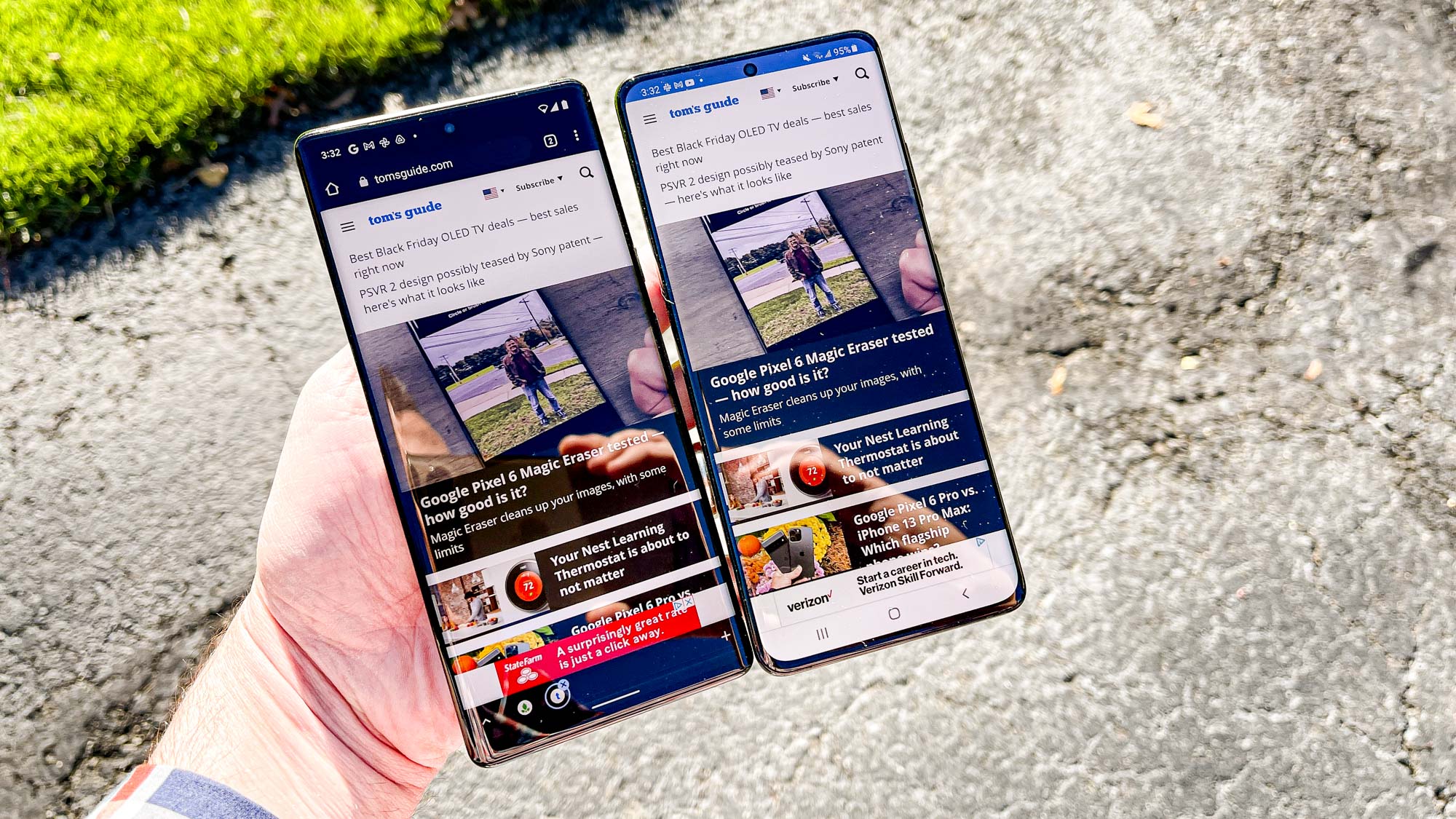
USB-C is universal. Android phones largely rely on USB-C ports for charging and data transfer these days, which is super convenient if yous're one of those people who actually likes to pack light and carry but ane cable. USB-C is also on many PCs these days, equally well as on the Nintendo Switch. Information technology'southward a beautiful thing.
Whereas Apple's Lightning cable is a relic of the days when every tech visitor felt compelled to develop its ain proprietary connector, USB-C represents the platonic single-port solution the manufacture is working toward. Information technology besides opens doors to faster charging technologies.
The OnePlus 9 Pro, for example, can charge from zero to 61 percent battery capacity in a mere xv minutes. Wait for 30 minutes and you'll accept a battery that's 99 percent full.
Compare that to the iPhone 12, which continues to stick with Lightning. And Apple no longer even includes a charger in the box.
In that location'due south an bodily file system (with drag-and-drop support on PC). Most people don't need to go their easily dirty with their smartphone'due south file system. Withal, information technology's proficient to know that Android gives you that option, if you desire it. Even improve, when you lot plug an Android handset into a Windows PC, you tin can very easily drag and drop files into folders, as if the device were just another drive.
That means your media libraries and documents are a snap to carry over and store locally, and yous don't take to subscribe to a monthly cloud service if you accept an especially large library. iPhones obscure the file system from the user for everything except photos, which tin be very frustrating for dealing with music, documents and other forms of media.
Some Android phones, like the Galaxy Note 20, even have special PC or brandish projection features, that allow you lot employ view and use your device in a desktop capacity. Samsung's DeX interface is one such instance of this. With such versatility, a high-cease Android phone could legitimately function as a replacement for one of the best Chromebooks or similarly ultraportable laptops.
Innovative features usually land on Android phones first. Certain, Apple'southward coffers are pretty stacked. However, it is simply one company, with one philosophy. As a consequence, iOS tin can be slow — or at least slower than the Android community — to adapt to emerging technologies.
With then many companies building Android phones, information technology's trivial surprise that Android partners tend to beat Apple to the market place with innovations in the mobile space. Wireless charging, fast charging, NFC, 4G LTE, 5G, OLED displays, in-screen fingerprint sensors, water resistance and multilens cameras all landed on Android devices before iPhones, also equally software breakthroughs like true multitasking, copy and paste and multiwindow support.
Of course, this isn't to say Apple hasn't delivered breakthroughs of its own. The iPhone X wasn't the commencement phone with face recognition, but it was the starting time with one that worked reliably and securely. All the same, far more Android phones are released from a diverseness of vendors every twelvemonth, so it's but a affair of scale that hardware running Google'due south platform is swifter to adapt.
iOS xv vs. Android 12
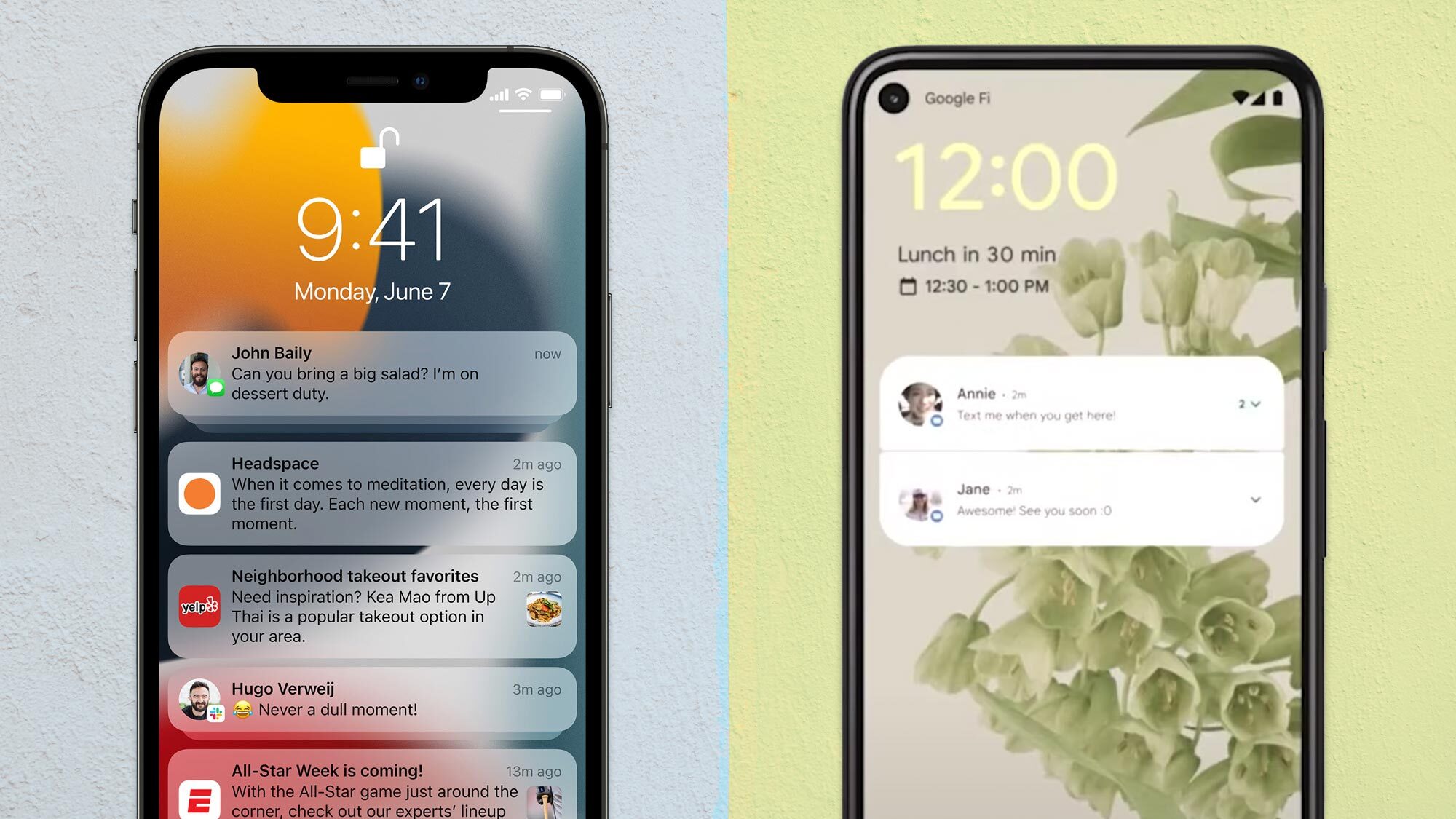
Beyond the core iOS vs. Android statement, we have the large updates for both operating systems. Android 12 is a huge design shift from previous versions, offer the Material Y'all pattern linguistic communication that caters itself to you lot with coincidental theming. There's too a new privacy dashboard and a whole host of other features. If you're interested, cheque out our Android 12 article.
With iOS 15 comes the new Focus mode and a slight overhaul to notifications, revamps to many core apps like FaceTime and Wallet, and a agglomeration more that we don't have time to talk over here. If you're interested, check out our iOS 15 coverage.
Only neither of these updates changes Android's or iOS' strengths, only fortifies them. And despite a world of difference between the two, there's a lot of overlap. Notifications in iOS 15, for case, are getting equally shut to Android's as possible with Apple outright copying the model. Android 12 is taking privacy more seriously, with very iOS-similar microphone and photographic camera indicators when either or both of those are active. And they both now feature breakdowns of what your apps accept been doing lately.
Both the Pixel six and iPhone 13 showcase the best that the 2 operating systems take to offer. From camera and display upgrades to new advancements in AI and motorcar learning, it's the best year yet for Android and iOS fans akin. And if you're platform-agnostic, yous take even more to wait forward to.
Android 12 and iOS 15 wait wildly different and still accept their core design philosophies intact, but now more than than ever, they're remarkably similar. The things I've talked about above remain true, so your decision on whether iPhone or Android is ameliorate for you comes downward to which of the strengths entreatment more to yous.
Which should you choose?
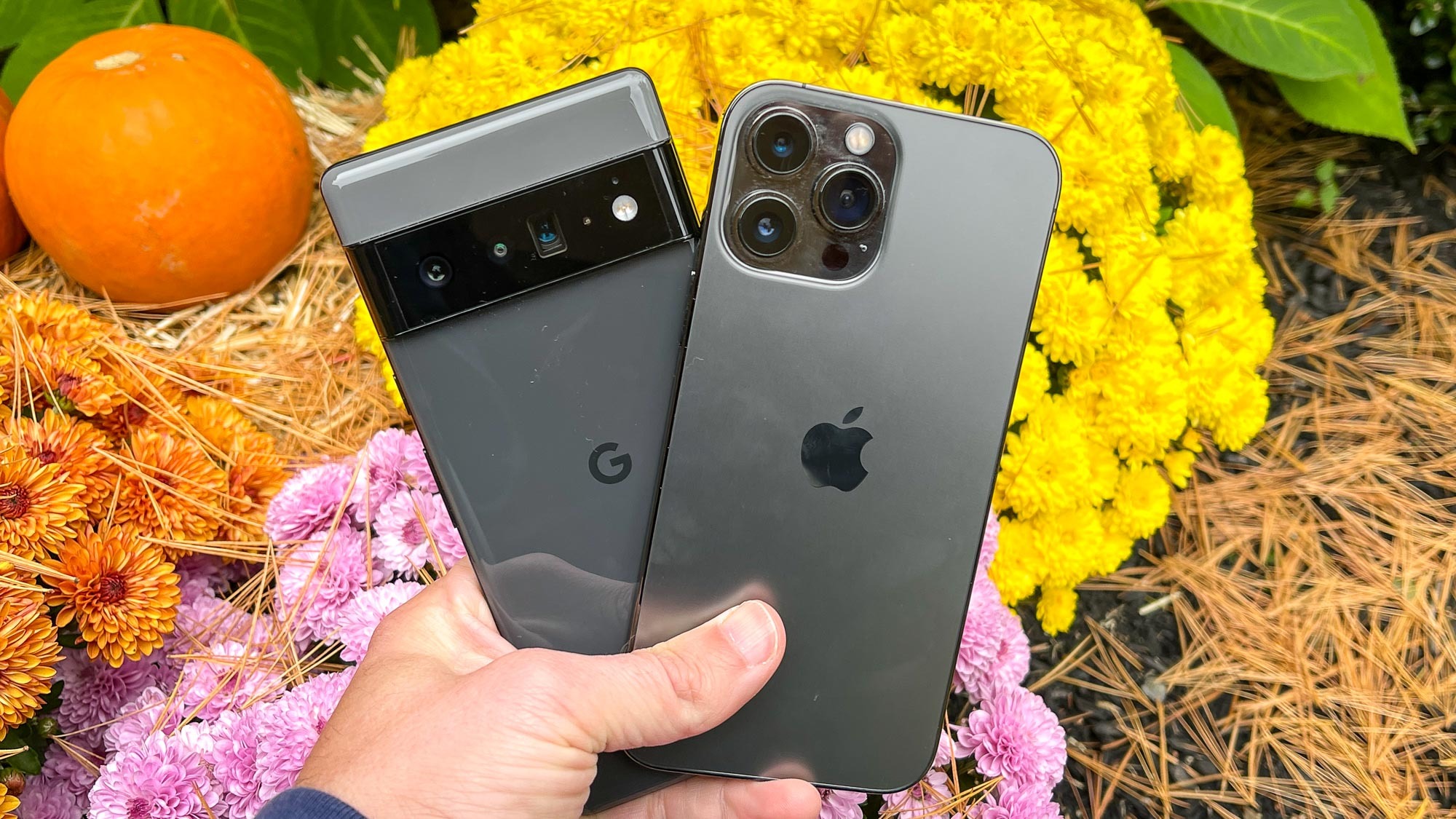
Then and then, iPhone or Android: Which should you lot choose? Both platforms have pros and cons, and, every bit with many purchase decisions, your choice will depend on what you lot value nigh.
Owning an iPhone is a simpler, more user-friendly experience. At that place's less to recollect almost, and because Apple tree'due south iPhone represents the single almost popular make of smartphone, there's an abundance of support everywhere you go — whether you need your battery replaced or you're just trying to pick up a new case.
Android-device ownership is a bit harder in those respects. Nonetheless it'southward simultaneously more freeing, because it offers more choice — option of how much you want to spend, pick of hardware and software features, and choice in how you organize and personalize your experience. If you're extremely particular about the engineering you utilise, you lot might discover Android more liberating — dare I say, fun — though you'll also likely lament the relative lack of high-quality apps (eastward.g. Twitter) and accessories.
If you're wondering which particular device you should switch to, there's no better place to first than our lists of the best iPhones and best Android phones. Whichever device you lot pick, only make certain it fits with your operating system preferences.

Source: https://www.tomsguide.com/face-off/iphone-vs-android
Posted by: taylorwituessarks43.blogspot.com
0 Response to "iPhone vs. Android: Which is better for you?"
Post a Comment